
October 23 |
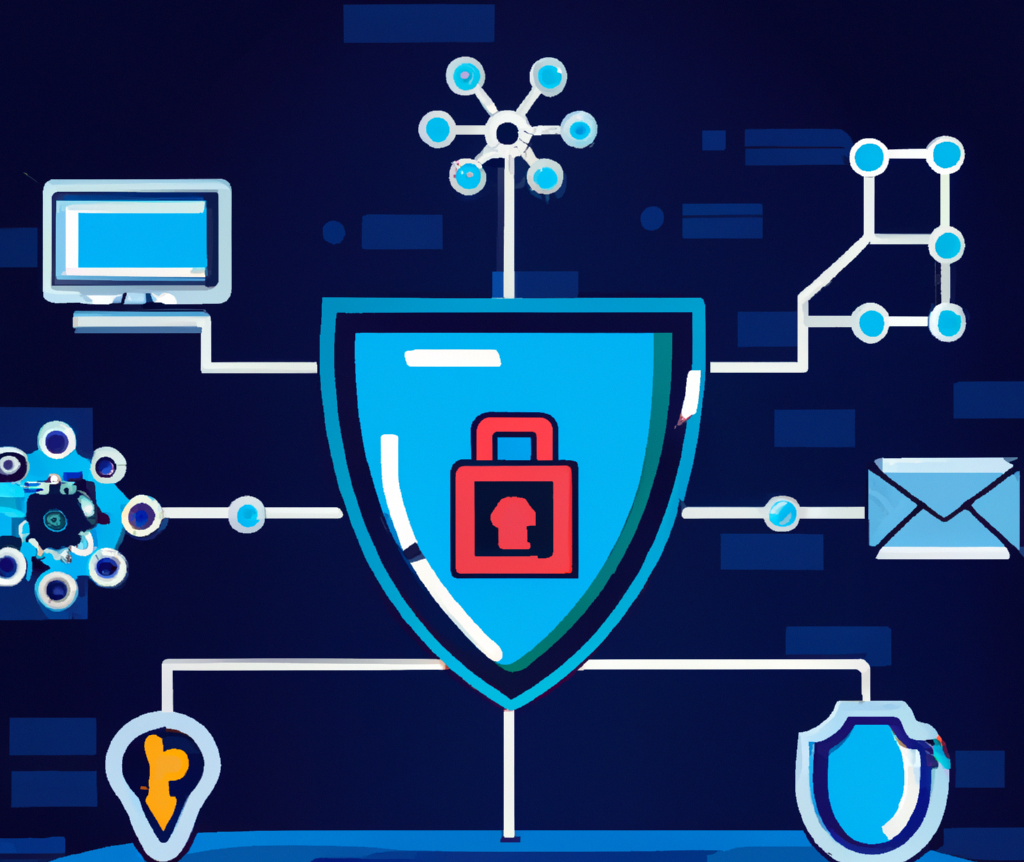
Meta Description: Explore Cyber Security Technology (CyberTech), its key technologies, benefits, emerging trends, challenges, and best practices for protecting digital assets in the modern world.
Suggested URL Slug: /cyber-security-technology-cybertech
Primary Keyword: Cyber Security Technology (CyberTech)
Related Keywords: Cybersecurity solutions, artificial intelligence in cybersecurity, cloud security, zero-trust security, data protection, threat detection, cybersecurity trends, and digital risk management.
In today's digital world, technology powers nearly every aspect of our lives. Businesses rely on cloud platforms to manage operations, financial institutions process millions of transactions electronically, healthcare providers store sensitive patient information digitally, and individuals use connected devices for communication, shopping, banking, and entertainment.
While this digital transformation has created remarkable opportunities, it has also introduced significant security risks. Cybercriminals continuously develop new methods to exploit software vulnerabilities, steal confidential information, disrupt business operations, and compromise digital identities.
This is where Cyber Security Technology, commonly known as CyberTech, becomes essential.
CyberTech encompasses the technologies, tools, systems, and practices designed to protect digital environments against cyber threats. It helps organizations secure their networks, safeguard sensitive data, identify suspicious activities, prevent unauthorized access, and respond effectively to security incidents.
From artificial intelligence-powered threat detection to advanced encryption and zero-trust architecture, CyberTech is transforming how organizations approach digital security.
Cybersecurity is no longer simply an IT concern. It is a fundamental component of business strategy, customer trust, regulatory compliance, and long-term digital resilience.
In this comprehensive guide, we will explore what Cyber Security Technology is, how it works, the technologies driving its evolution, its benefits and challenges, and the best practices organizations can adopt to build a stronger cybersecurity posture.
Cyber Security Technology refers to the collection of digital technologies and security solutions used to protect computers, networks, applications, cloud infrastructure, connected devices, and information from cyberattacks.
Its primary objective is to maintain the confidentiality, integrity, and availability of digital information and systems.
CyberTech combines technical safeguards, automated monitoring, risk management, security policies, and incident response capabilities to reduce the likelihood and impact of cyber incidents.
For example, when an employee signs in to a corporate application using multifactor authentication, an organization monitors network traffic for suspicious activity, or a security platform detects malicious software, CyberTech is helping protect the digital environment.
Most cybersecurity programs are built around the CIA triad.
Confidentiality
Confidentiality ensures that sensitive information is accessible only to authorized individuals and systems. Encryption, access controls, and identity verification help prevent unauthorized disclosure.
Integrity
Integrity ensures that data remains accurate, complete, and protected from unauthorized modification. Digital signatures, file integrity monitoring, and controlled change management can help maintain data integrity.
Availability
Availability ensures that authorized users can access systems and information when needed. Backups, redundant infrastructure, disaster recovery plans, and distributed denial-of-service protection support availability.
These three principles provide the foundation for designing, implementing, and evaluating effective cybersecurity solutions.
As organizations become increasingly dependent on digital infrastructure, cybersecurity has become a business necessity rather than an optional investment.
Several factors explain its growing importance.
Cybercriminals use techniques such as phishing, ransomware, credential theft, malicious software, and exploitation of software vulnerabilities to compromise systems.
CyberTech helps organizations identify threats, block suspicious activities, and limit the damage caused by successful attacks.
Organizations collect and process valuable information, including customer records, employee information, financial transactions, intellectual property, and business strategies.
Data encryption, access controls, data loss prevention, and secure storage technologies help reduce the risk of unauthorized access and disclosure.
A cyberattack can interrupt operations, prevent employees from accessing essential applications, disrupt customer services, and damage business relationships.
Security monitoring, reliable backups, disaster recovery capabilities, and incident response planning help organizations recover more effectively.
Customers expect organizations to handle their personal information responsibly. A serious data breach can undermine confidence and lead to lost business.
Strong cybersecurity demonstrates a commitment to protecting customer information and maintaining reliable digital services.
Organizations may need to comply with data protection, privacy, financial, healthcare, and industry-specific security requirements.
CyberTech can help implement appropriate safeguards, maintain audit records, and support compliance efforts. However, technology alone does not guarantee compliance; organizations must also meet applicable legal and operational obligations.
Cybersecurity is not a single product. It is a collection of complementary technologies that protect different parts of the digital environment.
Network security protects the communication systems connecting computers, servers, applications, and other devices.
Common network security technologies include:
For example, a company can segment its payment systems from its general office network to reduce the risk that an attacker compromising an employee workstation can directly access financial infrastructure.
Endpoints are devices that connect to organizational networks, including laptops, desktops, servers, smartphones, and virtual machines.
Because these devices are frequent targets for attackers, endpoint protection is a critical part of CyberTech.
Endpoint security solutions may provide malware prevention, behavioral analysis, application controls, device management, and centralized monitoring.
Two important categories are:
Endpoint Detection and Response (EDR): Collects endpoint activity data, identifies suspicious behavior, and supports investigation and response.
Extended Detection and Response (XDR): Correlates security signals across multiple environments, potentially including endpoints, email, networks, identities, and cloud services.
These technologies help security teams investigate threats that might otherwise remain hidden within individual systems.
Cloud computing enables organizations to store data, host applications, and run workloads using cloud service providers. However, cloud environments introduce risks involving misconfigurations, excessive permissions, exposed services, compromised credentials, and insecure application interfaces.
Cloud security technologies help protect infrastructure, platforms, applications, and data hosted in cloud environments.
Important capabilities include:
Cloud security also depends on the shared responsibility model. Providers and customers have different security responsibilities depending on the service being used.
Organizations must understand which controls they are responsible for implementing and which are provided by the cloud service provider.
Identity and Access Management (IAM) determines who can access a system, what resources they can use, and which actions they are permitted to perform.
IAM technologies include single sign-on, multifactor authentication, privileged access management, identity lifecycle management, and role-based access control.
Multifactor authentication (MFA) is particularly important because it adds verification beyond a password. Depending on the implementation, factors may include a physical security key, an authenticator application, or biometric verification.
Phishing-resistant authentication methods, such as appropriately configured passkeys and hardware security keys, can provide stronger protection against credential theft than passwords alone.
Organizations should also follow the principle of least privilege: every user and service should receive only the access necessary to perform its assigned responsibilities.
Data security protects information throughout its lifecycle, from collection and storage to processing, sharing, archiving, and deletion.
Key technologies include:
For example, a healthcare organization can use encryption to protect patient records while implementing access policies that restrict those records to authorized personnel.
Encryption is highly valuable, but it must be implemented correctly. Weak key management, compromised endpoints, and excessive access permissions can undermine its effectiveness.
Application security focuses on protecting websites, mobile applications, APIs, and enterprise software from vulnerabilities and abuse.
Common technologies and practices include:
Application security is most effective when integrated throughout the software development lifecycle.
Developers should identify security weaknesses early, review third-party dependencies, protect development credentials, and validate that applications enforce authentication and authorization correctly.
Security Information and Event Management (SIEM) platforms collect and analyze security-related logs from systems, applications, endpoints, and network devices.
By correlating events from different sources, SIEM platforms can help security teams identify patterns associated with potential attacks.
For instance, a series of failed login attempts followed by an unusual successful login and a large data transfer may warrant investigation.
Modern SIEM platforms can support centralized visibility, security alerting, compliance reporting, incident investigation, and integration with automated response systems.
Their effectiveness depends on the quality of collected data, the relevance of detection rules, and the ability of analysts to investigate meaningful alerts.
Zero trust is a security approach based on the principle that access should not be granted automatically because a user or device is inside a traditional corporate network.
Instead, access decisions consider identity, device security, requested resources, contextual risk, and applicable policies.
Zero-trust implementations commonly include:
Zero trust is not a single product that can be installed overnight. It is an architectural approach that requires coordinated improvements across identity, devices, applications, networks, and organizational processes.
Artificial intelligence (AI) and machine learning are becoming increasingly important in cybersecurity.
Traditional security systems often rely on known threat signatures, predefined rules, and manually developed detection logic. These techniques remain valuable, but AI can help analyze large volumes of data and identify patterns that are difficult to detect using simple rules alone.
Machine learning models can analyze authentication events, endpoint behavior, network traffic, and other security signals to identify deviations from expected activity.
For example, a security system might flag an account that suddenly accesses unusual resources, connects from an unexpected environment, and downloads an unusually large amount of information.
Such behavior is not automatically proof of an attack, but it can help security teams prioritize investigations.
AI-enabled security platforms can help summarize alerts, correlate related events, recommend investigative steps, and automate selected response actions.
Depending on the system and configuration, automated actions might include isolating an endpoint, disabling a compromised account, or blocking a suspicious connection.
High-impact actions should be governed by carefully designed policies, appropriate human oversight, and recovery procedures.
Security analysts often face large numbers of alerts and complex investigation workflows.
AI assistants can help translate technical evidence into understandable summaries, generate investigation queries, and identify relevant context across security records.
This can reduce repetitive work and help analysts focus on high-priority incidents.
AI is not exclusively a defensive technology. Attackers can also use AI to improve phishing messages, automate reconnaissance, create convincing impersonations, and accelerate certain stages of cyberattacks.
Organizations using AI must also consider risks such as prompt injection, sensitive data exposure, insecure integrations, model misuse, and excessive permissions granted to AI agents.
The most effective approach combines AI capabilities with sound security engineering, validated evidence, human judgment, and established incident response procedures.
CyberTech continues to evolve as organizations adopt new digital services and attackers develop new methods.
Several trends are shaping the direction of cybersecurity.
As remote work, cloud applications, and distributed infrastructure expand, traditional network boundaries provide less reliable protection.
Zero-trust approaches help organizations enforce identity-based access policies and reduce unnecessary trust between systems.
Organizations increasingly use containers, microservices, serverless computing, and managed cloud platforms.
These environments require security controls that understand dynamic workloads, automated deployments, cloud permissions, and infrastructure configuration.
Security must be integrated into both cloud operations and software delivery processes.
Security Orchestration, Automation, and Response (SOAR) technologies connect security tools and automate repeatable workflows.
Examples include enriching alerts with threat intelligence, creating incident tickets, collecting investigation evidence, and blocking confirmed malicious indicators.
Automation can improve response speed, but poorly designed workflows can also spread errors. High-risk actions should have clear approval rules and rollback procedures.
Quantum computing could eventually threaten certain widely used public-key cryptographic systems.
Post-quantum cryptography aims to develop cryptographic methods designed to resist attacks from both classical and sufficiently capable quantum computers.
Organizations do not need to assume that large-scale quantum attacks are already practical. However, long-lived sensitive information and systems with long replacement cycles make preparation important.
A practical strategy includes identifying cryptographic dependencies, inventorying certificates and algorithms, monitoring standards, and planning for migration to approved post-quantum cryptographic solutions.
XDR technologies aim to bring security signals from different layers into a more unified detection and investigation workflow.
This can help analysts identify connections between phishing emails, compromised credentials, endpoint behavior, and suspicious cloud activity.
The value of XDR depends on integration quality, data coverage, detection accuracy, and how well the platform fits an organization's existing environment.
Smart devices, industrial sensors, connected medical equipment, and building automation systems create additional entry points into digital environments.
Many devices have limited processing power, long service lives, or inconsistent patching capabilities.
IoT security requires asset inventories, secure configuration, network segmentation, controlled administrative access, firmware management, and appropriate device replacement plans.
Modern applications often depend on open-source libraries, external services, build tools, and third-party software components.
A vulnerability or compromise in one dependency can affect many downstream organizations.
Software supply chain security practices include dependency scanning, secure build pipelines, code signing, provenance verification, software bills of materials, and controlled release processes.
These measures help organizations understand what they deploy and assess the potential impact of newly discovered vulnerabilities.
Understanding the threat landscape helps organizations choose appropriate security controls.
Phishing attempts manipulate people into revealing credentials, opening malicious attachments, transferring money, or approving unauthorized actions.
Attackers may impersonate executives, suppliers, technical support teams, or trusted service providers.
Defenses include phishing-resistant MFA, email filtering, domain protection, employee awareness training, and verification procedures for sensitive requests.
Ransomware attacks typically involve malicious activity that prevents access to data or systems, often through encryption or other forms of disruption. Some attackers also steal information and threaten to publish it.
Effective defenses include rapid patching, endpoint monitoring, least-privilege access, network segmentation, secure backups, and tested recovery plans.
Organizations should maintain backups that attackers cannot easily modify or delete.
SHARE THIS:
© Copyright 2026Global Trailblazer AwardsAll Rights Reserved


